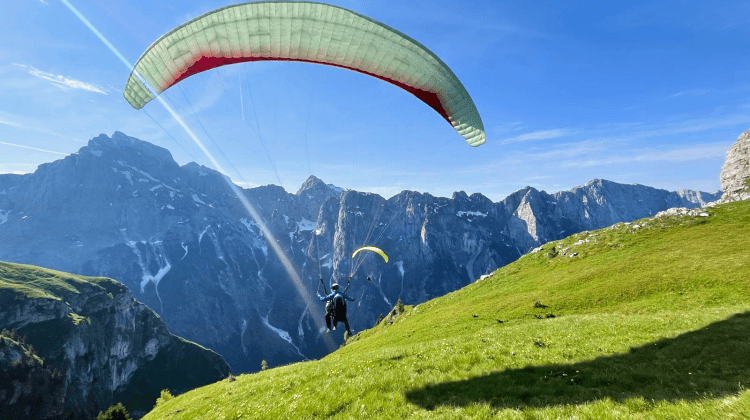
Why paragliding is one of the greenest adventure sports
Paragliding stands out as one of the most eco-friendly forms of aerial adventure. With no engine, no fuel, and almost zero emissions during flight, it offers a rare blend of excitement and environmental consciousness. While other adventure sports often rely on manufactured infrastructure or fossil fuels, paragliding works almost entirely with nature.
No engines, no emissions: at the core of paragliding’s low-impact nature is its simplicity. Paragliders don’t use motors or fuel. Once airborne, pilots ride thermals, ridge lift, and mountain breezes—all naturally occurring phenomena. There is no exhaust, no noise pollution, and no mechanical intervention beyond the takeoff run. It’s flight powered by wind and gravity, not combustion.
Lightweight, minimal gear: the gear required is impressively basic: a fabric wing, suspension lines, a harness, and a helmet. Modern wings are built from durable yet lightweight materials that can last hundreds of flight hours. With good care, a single wing setup can be used for many years, and there’s a strong secondhand market that promotes reuse. The production impact of this gear is relatively low, especially considering its longevity. Many pilots also use compact instruments like variometers and GPS units. These tools are lightweight, battery-powered, and made to last, adding functionality without adding much footprint.
Low environmental footprint on the ground: launch sites are typically grassy hillsides, alpine meadows, or mountain ridges. Many pilots practice hike-and-fly, carrying gear up on foot, which keeps access paths simple and human-powered. Although trails are used and can show signs of wear, the impact is generally small and no major infrastructure is required for flying. Once in the air, the interaction with the environment is near-zero.
Natural energy in action: paragliding relies on natural energy systems—thermals, ridge lift, and dynamic airflow shaped by terrain. Pilots don’t fight the elements but learn to work with them, reading the land and weather with precision. This deep engagement with nature builds an intuitive understanding of the environment and a genuine respect for its power and fragility.
Connection builds stewardship: being so directly influenced by weather, terrain, and thermal cycles encourages pilots to develop an acute awareness of the natural world. This awareness often leads to stronger environmental values and behaviors. When safe flying depends on cloud formation, sun angle, wind gradient, and temperature shifts, the relationship with nature becomes more than recreational—it becomes essential.
Reducing travel impact: while the act of flying is green, travel to and from launch sites can carry a footprint. However, paragliding gear is compact and easy to carry, making travel by public transport, bike, or foot more feasible than for many other sports. Pilots often carpool or use shuttles, especially in cross-country flights or competitions. Hike-and-fly routes reduce the need for motorized access even more.
Environmental awareness in the air: from above, changes in the landscape are more noticeable. Pilots can see erosion, deforestation, and pollution from a unique perspective, sometimes spotting issues invisible from the ground. This vantage point turns environmental concerns from abstract to visible, reinforcing the need for protection and sustainable use of flying sites.
Designs moving toward sustainability: manufacturers are beginning to explore more sustainable materials and practices, such as lighter, more durable fabrics, and modular gear that can be repaired rather than replaced. Though still early in development, these efforts reflect growing awareness of environmental responsibility within the sport.
Conclusion
Paragliding demonstrates that adventure doesn’t have to come at nature’s expense. It offers a model for sustainable recreation: low-impact, highly rewarding, and deeply connected to the natural systems it depends on. As more people seek ways to explore responsibly, paragliding remains a quiet yet powerful example of what green adventure can look like.