Paragliding in different seasons in the Soča Valley
The Soča Valley in the Julian Alps is one of the premier paragliding destinations in Europe. Its unique geography, combining high mountains and deep valleys, creates diverse flying conditions throughout the year. Each season paints the valley in a different light and offers pilots varied opportunities to experience this incredible landscape from the air.
Spring flights
In spring, the Soča Valley wakes from its winter sleep with powerful and dynamic thermals. Snowmelt from the surrounding peaks influences ground heating patterns, creating early season challenges. Mornings often begin with gentle lift, but by midday the air can become sharp and active, especially around peaks like Kanin, Krn, and Mangart. Experienced pilots cherish the spring conditions here for early cross-country flights, often linking ridges along the valley and pushing deeper into the Julian Alps. Caution is needed due to the changing terrain conditions, but the rewards are fresh, strong lift and an early start to the flying season.


Summer flights
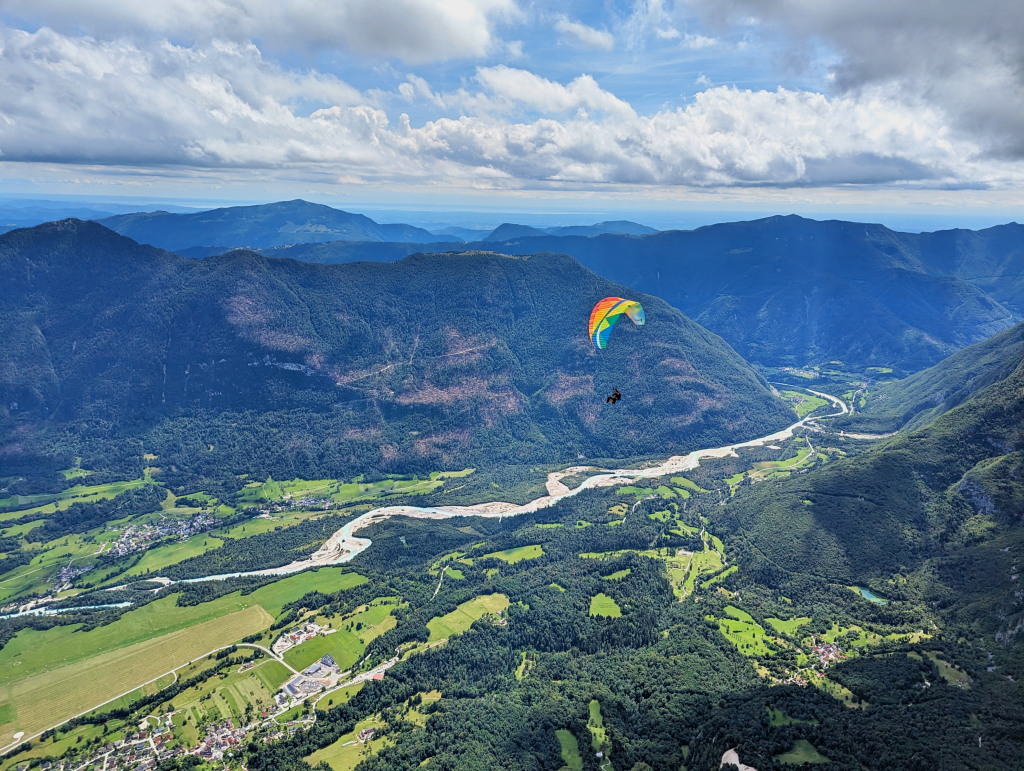
Summer transforms the Soča Valley into a true paragliding paradise. Consistent thermals, long flying days, and abundant landing fields make it ideal for all levels of pilots. Conditions stabilize, and reliable flying windows extend from late morning into early evening. Sites like Stol, Kobala, and Lijak become hubs of activity. The river below, shimmering in its distinctive emerald color, offers a striking visual companion to flights. Midday flights can become turbulent in strong sun, especially in late July and August, so many pilots prefer launching in early morning or late afternoon for smoother air. XC pilots can expect distances over 100 km on good days, connecting the valley with neighboring regions.
Fall flights
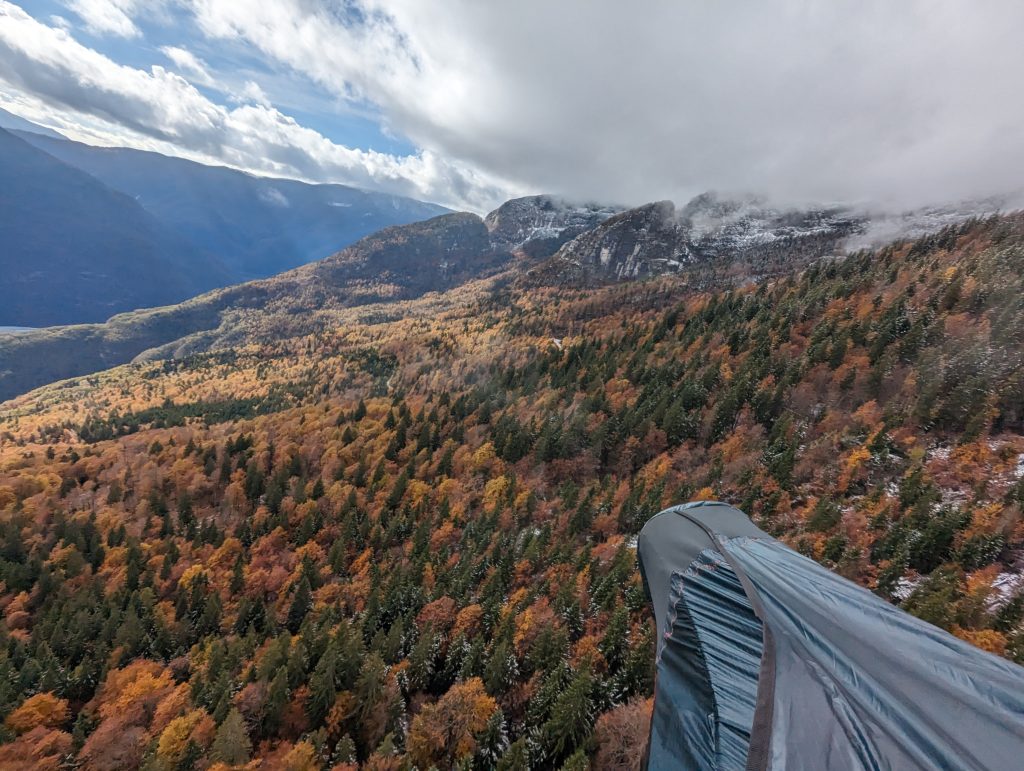
Autumn brings a softer, more intimate atmosphere to the Soča Valley. Thermal strength decreases, but smooth, predictable lift remains available for most of the day, especially in September. The surrounding forests shift into brilliant shades of orange, yellow, and red, offering breathtaking views during calm soaring flights. Fewer visitors make the takeoffs and landings less crowded, and the entire valley slows into a peaceful rhythm. Pilots often enjoy relaxed thermalling and ridge soaring, savoring the final extended flights before winter sets in. The cooler, more stable air provides a forgiving playground for those looking to improve their precision flying skills.
Winter flights
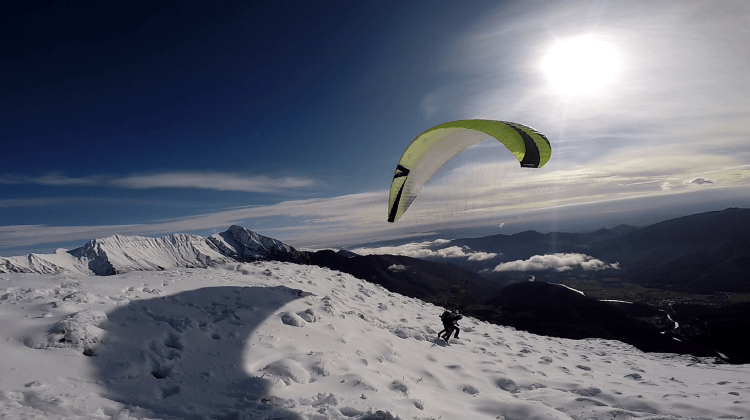
Winter in the Soča Valley narrows flying options but does not end them. Lower sites like Lijak near Nova Gorica, where mild Mediterranean influences prevail, become the primary choices. Ridge soaring days, fueled by gentle south winds, offer smooth flights over green hills even when the higher mountains are snow-covered. The main valley itself can still offer flyable days in December and January, especially when cold but stable high-pressure systems dominate. Winter pilots need to adapt gear to the cold, but the rewards include clear visibility stretching far across the Alps and a sense of peaceful isolation in the quiet landscape.

For more information about paragliding in the Soča Valley visit our ULITIMATE GUIDE FOR PARAGLIDING IN SOČA VALLEY.