How thermals work
One of the most crucial and fascinating natural forces that makes extended paragliding flights possible is the thermal. For both beginners and seasoned pilots, understanding how thermals work and how to use them effectively is key to enhancing flight performance, safety, and the overall experience. Thermals are not just a phenomenon experienced in the air, they are grounded in the fundamental laws of physics and atmospheric behavior, making them a captivating subject for both scientific curiosity and practical flight.
What are thermals?
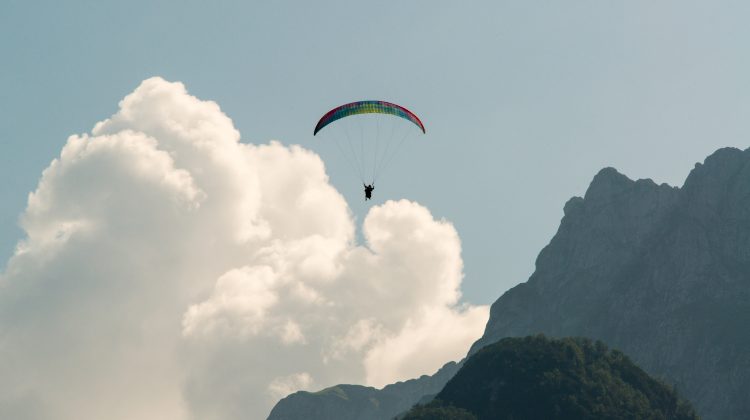
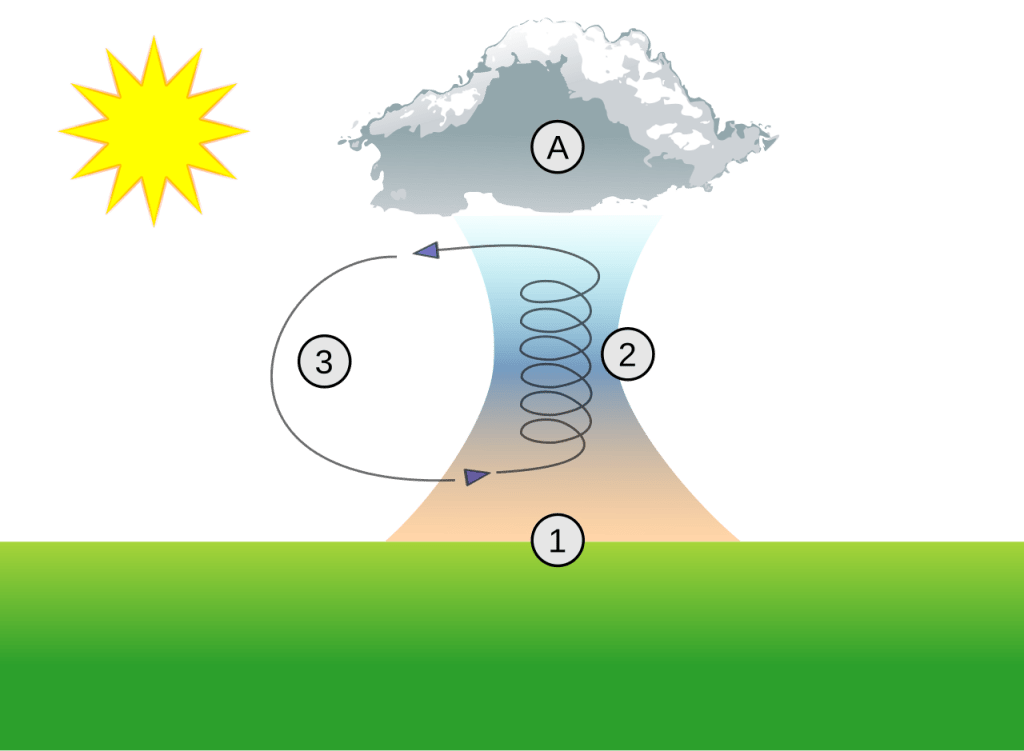
In simple terms, a thermal is a rising column of warm air. As the sun heats the Earth’s surface, different areas warm up at different rates due to variations in terrain, vegetation, and water content. When a patch of ground becomes significantly warmer than its surroundings, it heats the air directly above it. This warmer air becomes less dense and, due to the principle of buoyancy, starts to rise through the cooler, denser air surrounding it. This process is a form of convection, where heat is transferred by the movement of fluids, in this case, the air. As this warm air ascends, the atmospheric pressure around it decreases, causing the air to expand and cool. If the air cools to its dew point during its ascent, the moisture it contains begins to condense, often resulting in the formation of a cumulus cloud at the top of the thermal. This is why these clouds are commonly seen as indicators of thermal activity.
The formation and strength of thermals are influenced by multiple factors. Solar heating is, of course, the primary driver. Darker surfaces like asphalt, dry soil, and rocky outcrops absorb more solar radiation and thus generate stronger thermals compared to grassy fields or shaded areas. Topography also plays a role, slopes that face the sun warm up faster and more intensely, often becoming reliable sources of thermals. Light to moderate wind can help lift thermals cleanly off the surface, creating defined and usable columns of lift, while strong wind can shear or displace them. Time of day is another critical factor; thermals typically begin forming by mid-morning and reach their peak strength in the early afternoon when solar radiation is most intense.


The physics behind thermals
From a physical perspective, the dynamics of thermal formation are governed by the interaction between buoyant forces and atmospheric stability. The buoyant force acting on a parcel of air is determined by the difference in density between the parcel and the surrounding air. This relationship is described mathematically by the equation for buoyancy, F = g*(ρ_env – ρ_parcel)/ρ_env, where g is the acceleration due to gravity and ρ represents density. If the parcel is warmer (and therefore less dense) than the ambient air, the force is upward, propelling the parcel skyward. However, this ascent continues only if the surrounding atmosphere is unstable, that is, if the ambient temperature continues to decrease with altitude at a rate faster than the adiabatic lapse rate of the rising parcel.
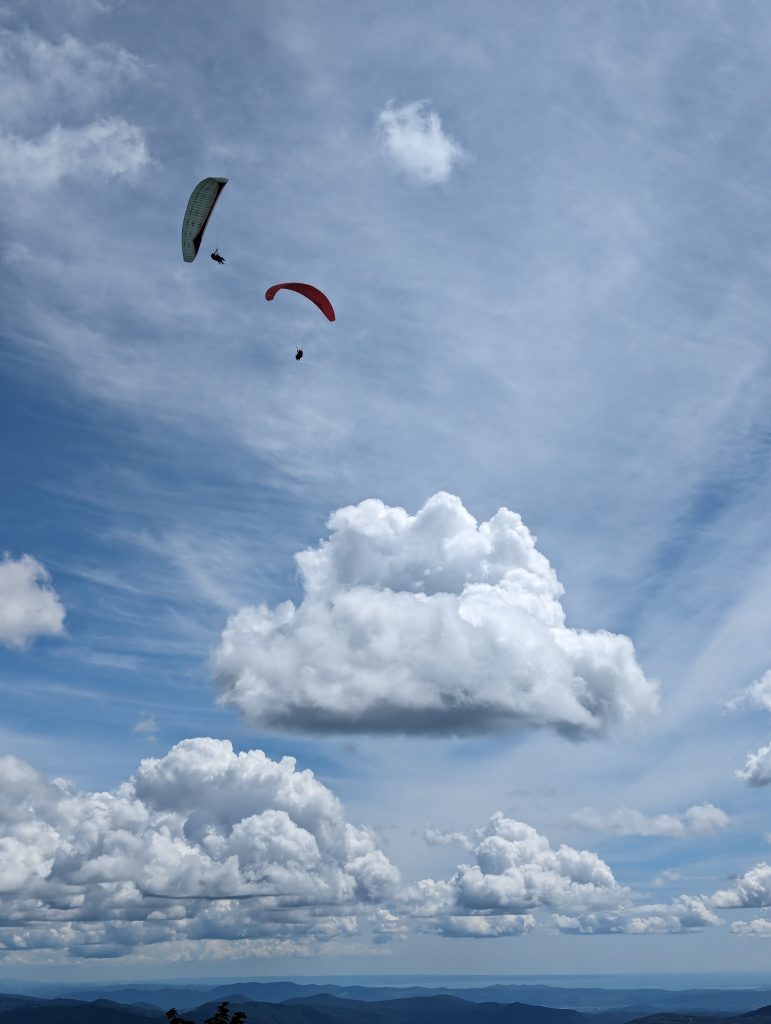
For paragliders, identifying and using thermals in flight is a vital skill that separates short descents from long, soaring adventures. One of the clearest indicators of a thermal is the presence of cumulus clouds. The flat base of a cumulus cloud often marks the altitude at which rising air cools to its dew point and begins to condense. Birds, especially raptors like hawks and vultures, provide another natural clue. These birds are experts at exploiting thermals, and if you see them circling upward without flapping their wings, it’s a reliable sign that lift is present. Other gliders and paragliders can also serve as indicators, watching where they are climbing gives valuable information about air movement in the area.
The process of engaging with a thermal involves more than just finding it, you need to stay within it and climb efficiently. This requires centering within the thermal’s core, where lift is strongest. Pilots typically do this by entering a circle when they feel lift, then adjusting the radius of their turn based on feedback from their variometer, a device that measures vertical speed. If the lift increases, you are near the core and should tighten your turn. If the lift weakens or becomes turbulent, you might be on the edge and should widen your turn to re-center. It’s a delicate balance of control, perception, and quick adjustments, honed through practice and experience.
Soaring in thermals is not just about climbing higher, it’s about doing so efficiently. Good thermal flying requires smooth, coordinated turns, careful energy management, and an intuitive sense of the air. Pilots develop the ability to read subtle atmospheric cues: shifts in pressure, minor turbulence, or changes in temperature. These nuances can signal whether a thermal is strengthening, weakening, or about to break apart. Understanding these subtleties is crucial, especially when flying cross-country, where success depends on moving from one thermal to the next with minimal loss of altitude in between.
Why thermals matter to pilots
Thermals matter deeply to the sport of paragliding for several reasons. Most importantly, they allow for significantly extended flight durations. Without thermals, flights would be limited to simple descents from takeoff points, often lasting just a few minutes. Thermals enable pilots to climb, extend their airtime, and cover great distances, sometimes tens or even hundreds of kilometers. This is the foundation of cross-country flying, where the goal is to navigate long distances using only the natural lift provided by the atmosphere. Thermals also play a critical role in competitive paragliding. Pilots must not only locate lift efficiently but also optimize their routes and speeds to reach designated waypoints and goals. The ability to read thermals and react quickly to changing conditions is what often separates top performers from the rest.
Beyond performance, thermals also contribute to flight safety. Understanding when and where thermals are likely to form helps pilots avoid potentially dangerous situations, such as flying into strong midday thermals with sharp edges or heavy turbulence. Knowledge of thermal dynamics allows for better decision-making, such as when to land, when to search for lift, or when to transition between thermals. It also fosters a deeper connection with the natural environment. Flying with thermals means engaging directly with the sun, the terrain, the sky, and the living creatures that share the air. It is an experience that blends technical skill with sensory awareness, scientific knowledge with intuitive feel.
Ultimately, thermals are the invisible engines that power free flight. They are a testament to the complexity and beauty of the natural world, and to our ability to navigate it with grace and intelligence. Understanding how thermals work is not just a technical skill for paragliders, it is a gateway to freedom, to longer and more meaningful flights, and to a profound appreciation of the physics that makes flight possible. Whether you’re a curious beginner or a seasoned cross-country pilot, delving deeper into the behavior of thermals will enrich every moment you spend in the air.